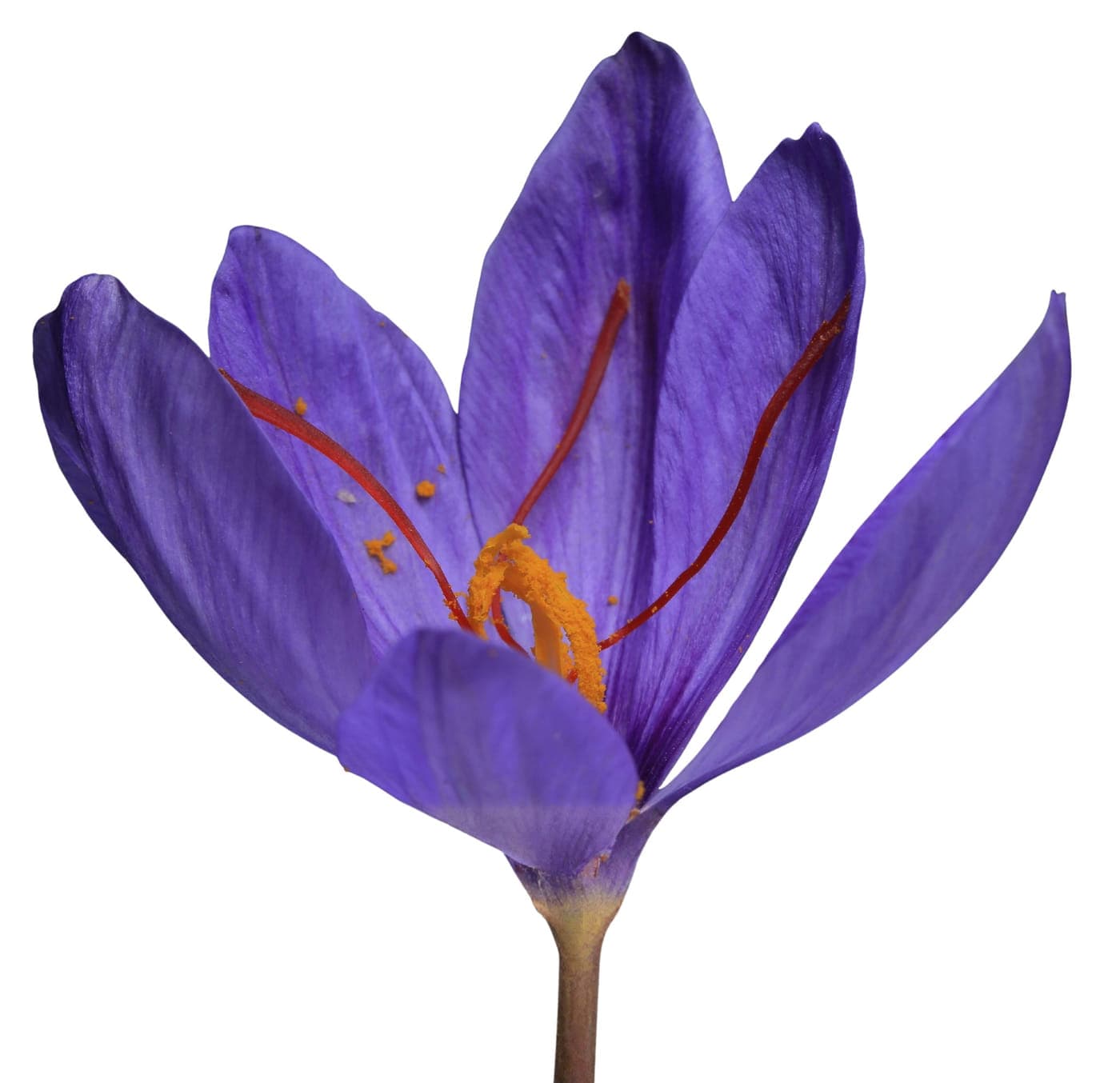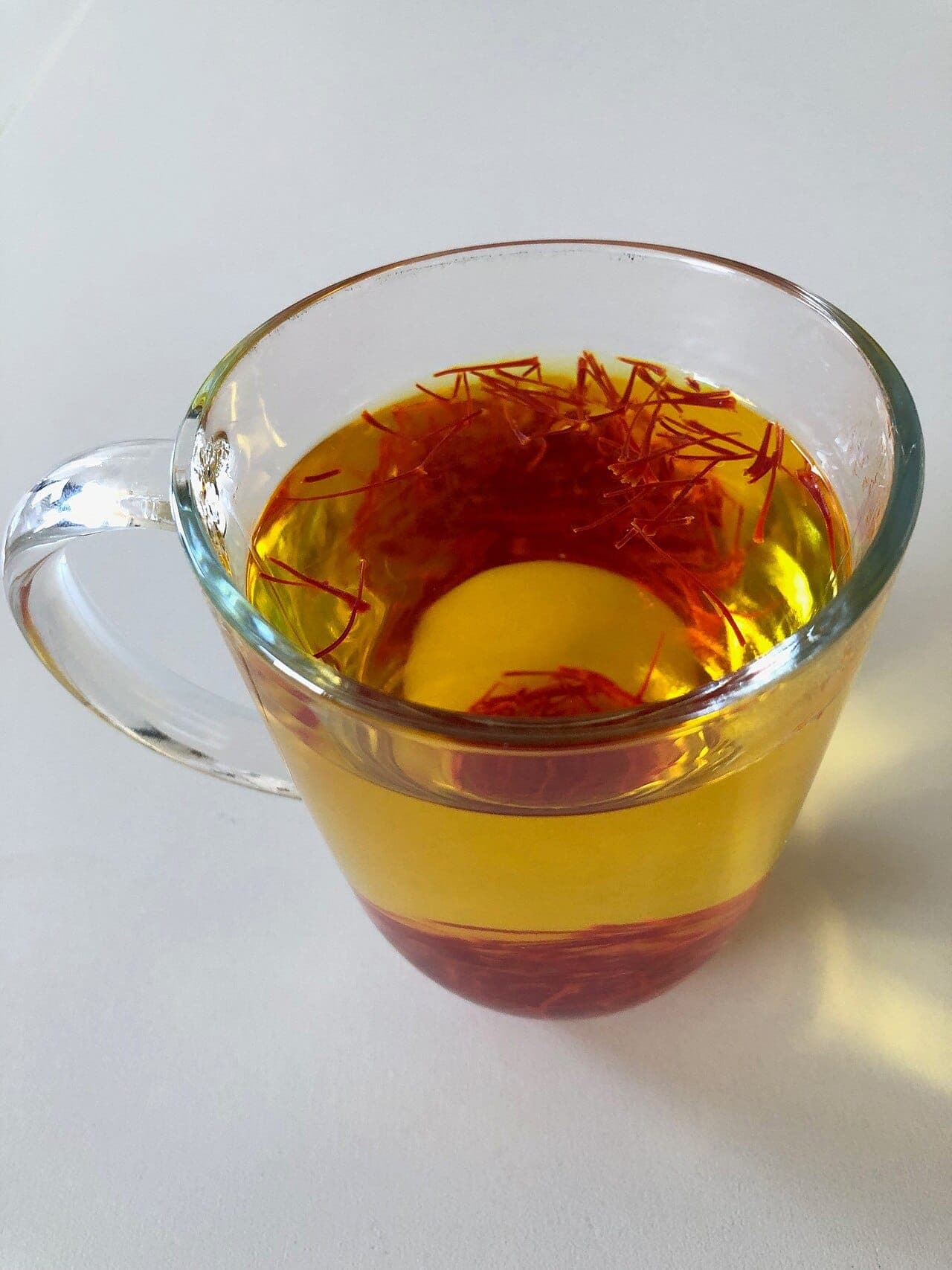

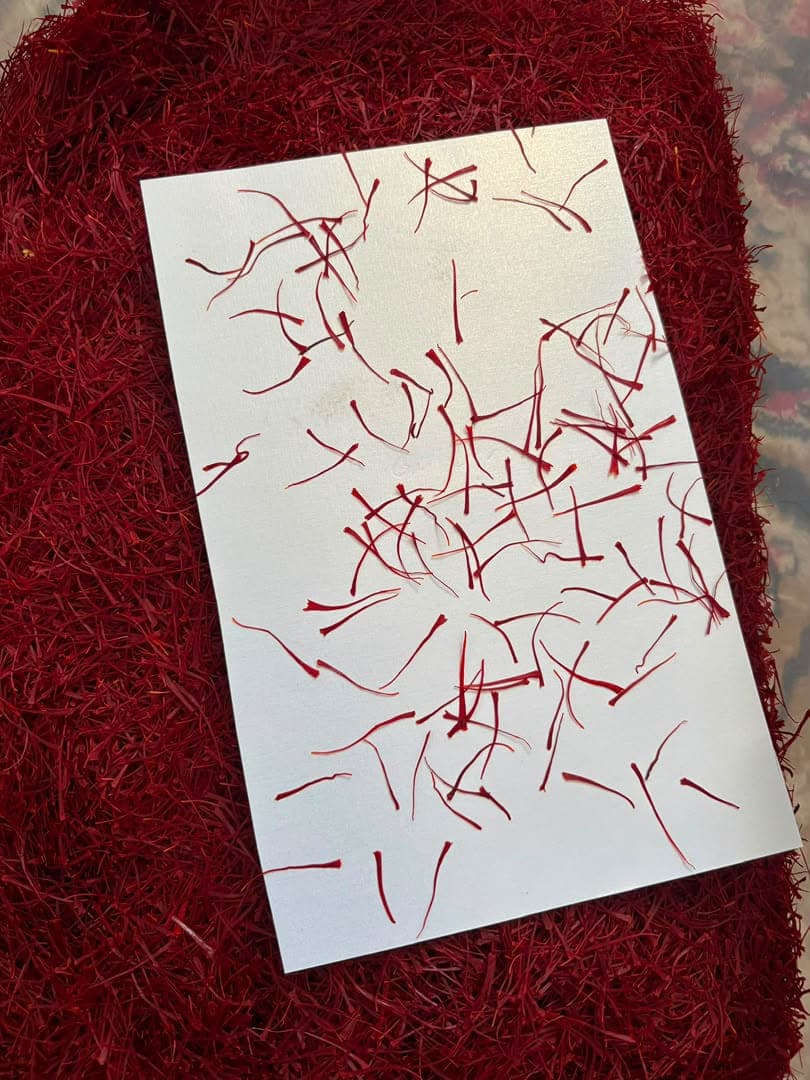
The four names in our saffron range are traditional trade terms. They describe how the stigma is cut and sorted, not a laboratory measurement. Here is what each one generally means.
Super Negin
The most selective cut. Only the red part of the stigma is kept, and the threads are sorted to be long, thick and straight, with an even deep-red colour and the style removed entirely. It is chosen when appearance matters: for gifts, special occasions and dishes where the threads are on show.
Negin
Long, full, all-red threads with the style removed. Negin is close to Super Negin in appearance, with slightly less strict sorting. It is a versatile choice for restaurants, celebrations and everyday dishes that deserve something special.
Sar Gul
Also written Sargol, meaning “top of the flower”. Only the red tips of the stigmas are used, with the style removed. The threads are shorter and some are broken, which makes no difference once the saffron is ground or steeped. It is a practical choice for regular cooking.
Pushal
Pushal keeps a short section of the paler style attached to the red stigma. The style carries little colour, so gram for gram Pushal usually gives a little less colour than all-red cuts. It is a good-value option for everyday rice, stews and drinks.
What grade names do not tell you
Grade names describe appearance and cut. On their own they do not tell you the colouring strength, aroma or freshness of a particular batch. Those depend on the harvest, drying, handling and storage, and are measured in a laboratory under standards such as ISO 3632.
Choosing between them
- For gifts and special dishes: Super Negin or Negin.
- For regular cooking: Sar Gul.
- For generous everyday use and value: Pushal.
Browse the grades in our products, or read about preparing and storing saffron.
Sources
Links open external research summaries. Findings are summarised, not endorsed as treatment.