
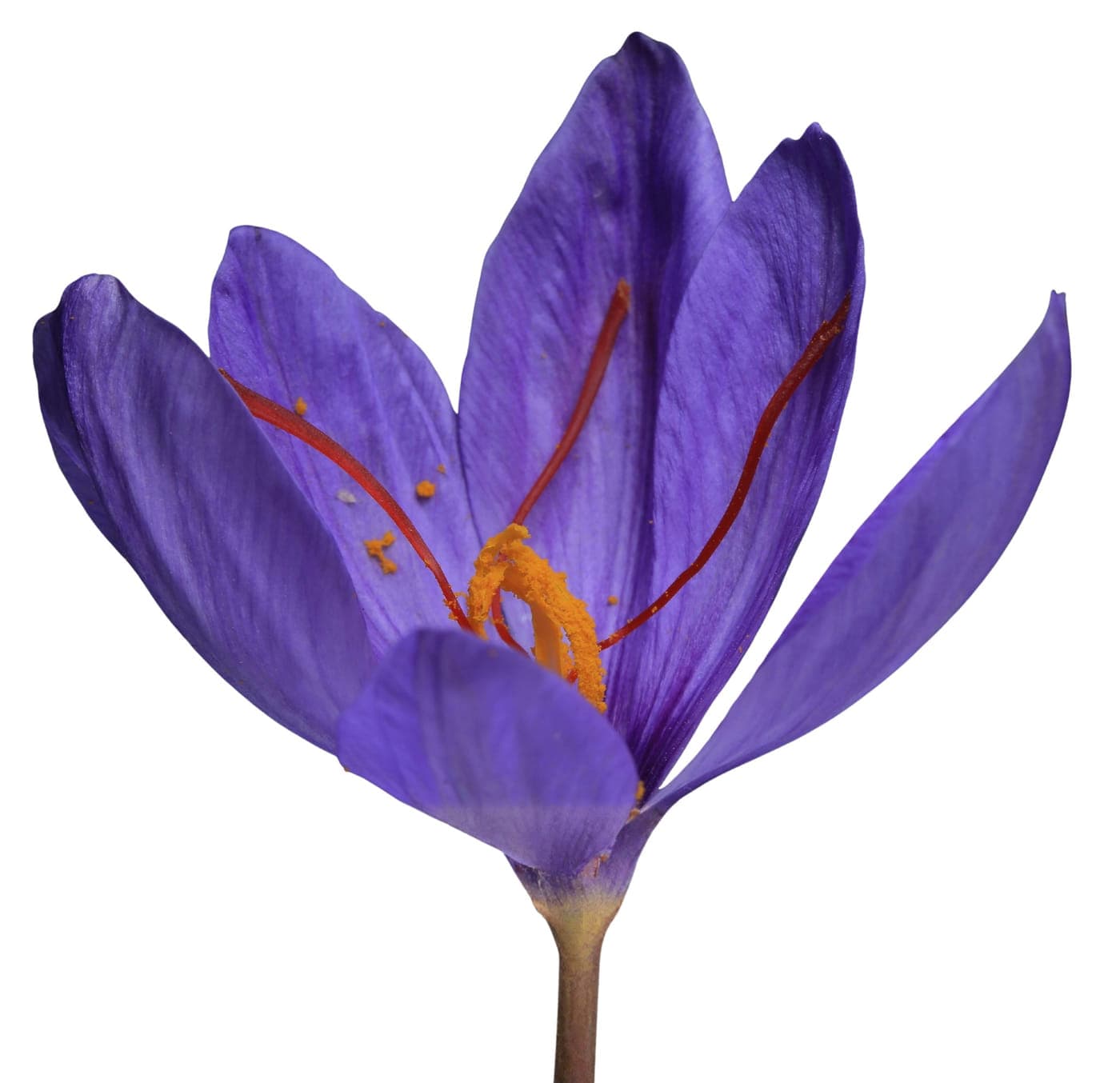
Saffron is one of the world's most treasured spices. A few threads can turn a pot of rice golden and fill a kitchen with fragrance. But what exactly are those threads?
From flower to spice
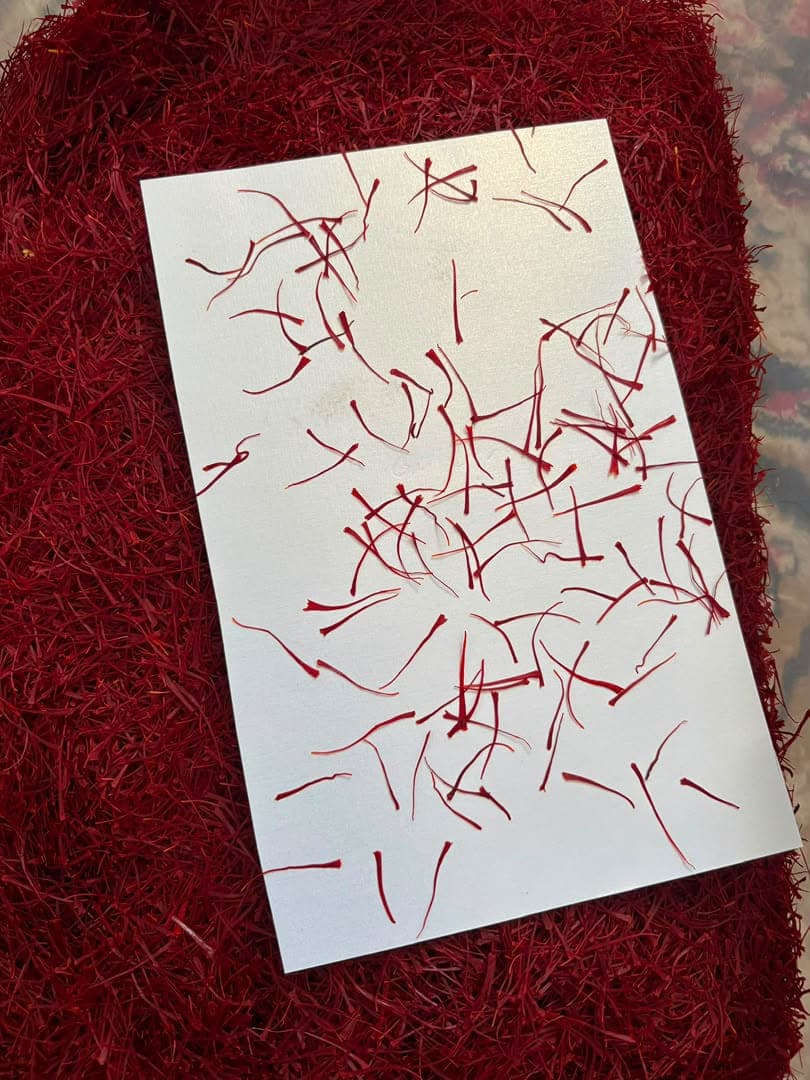
Saffron comes from the flower of Crocus sativus, a purple crocus that blooms in autumn. Inside each flower are three red stigmas, joined at the base to a paler style. At harvest, the flowers are picked by hand, the red stigmas are separated, and then they are carefully dried. Those dried stigmas are the threads we call saffron.
Because every flower gives only three stigmas, and the work is done by hand, it takes a very large number of flowers to produce a small amount of saffron. That is one reason it is so valued.
The compounds behind colour, taste and aroma
Saffron's character comes mainly from a group of natural compounds:
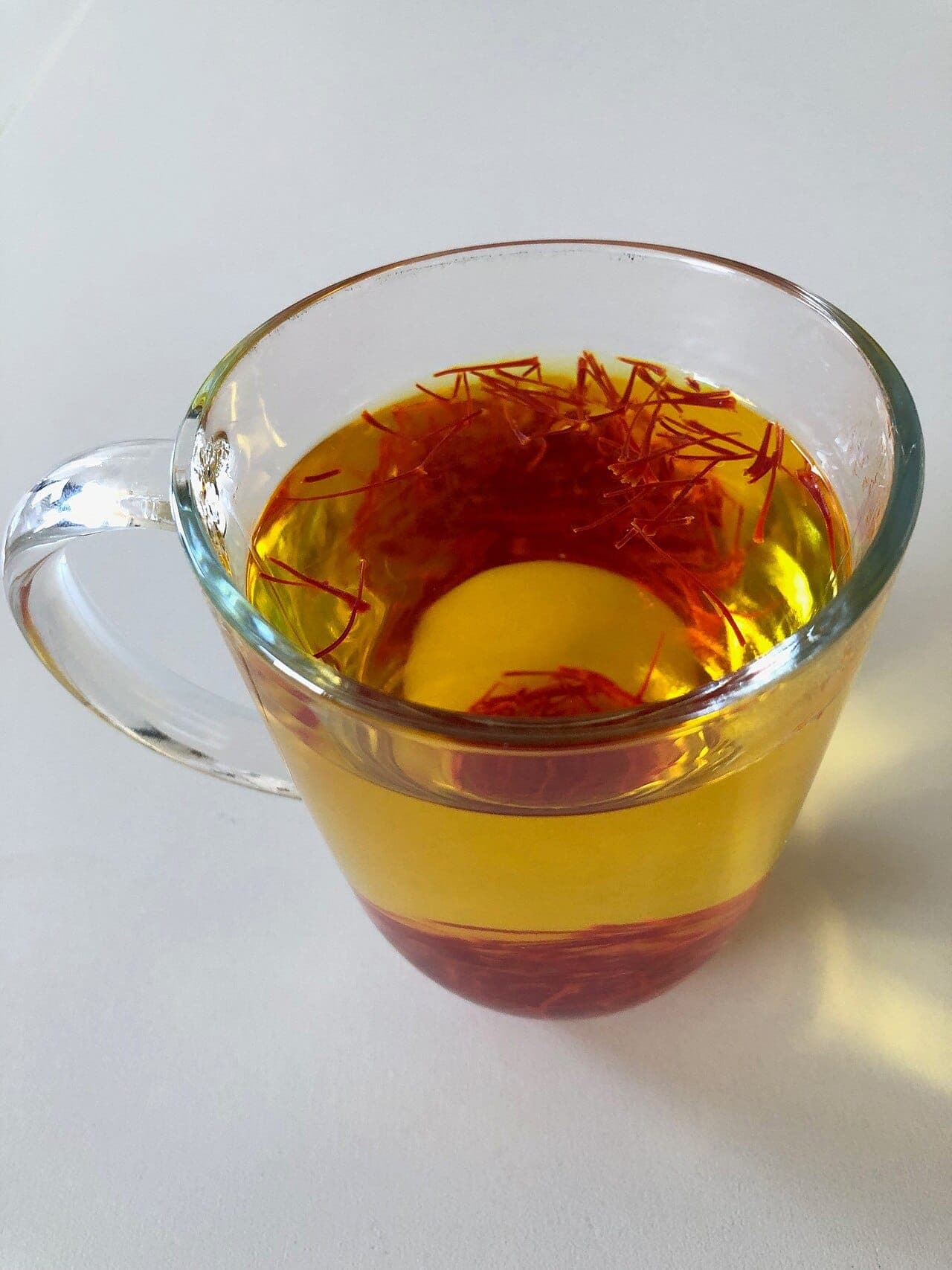
- Crocin gives saffron its golden-red colour. It dissolves readily in water, which is why saffron is steeped in warm liquid before use.
- Picrocrocin is responsible for much of saffron's distinctive, slightly bitter taste.
- Safranal is the main source of saffron's aroma. It is barely present in the fresh flower and develops mainly as the stigmas are dried and stored.
- Antioxidant compounds, including crocin, crocetin and safranal, are studied by researchers for their antioxidant activity.
How quality is described
In the trade, saffron is usually described by its cut, such as Super Negin, Negin, Sar Gul and Pushal. These names tell you which part of the stigma is included and how carefully the threads are sorted.
Laboratory quality is a separate question. The international standard ISO 3632 assesses saffron by measuring its colouring strength (from crocin), its bitterness (from picrocrocin) and its aroma (from safranal).
Read more in our guide to saffron grades, or learn how to cook with saffron.
Sources
Links open external research summaries. Findings are summarised, not endorsed as treatment.
- Avila-Sosa R, et al. Detection of Saffron's Main Bioactive Compounds and Their Relationship with Commercial Quality (opens in a new tab) · Foods, 2022
- Rahaiee S, et al. Evaluation of antioxidant activities of bioactive compounds and various extracts obtained from saffron (Crocus sativus L.): a review (opens in a new tab) · Journal of Food Science and Technology, 2015